Tag: Economic Development

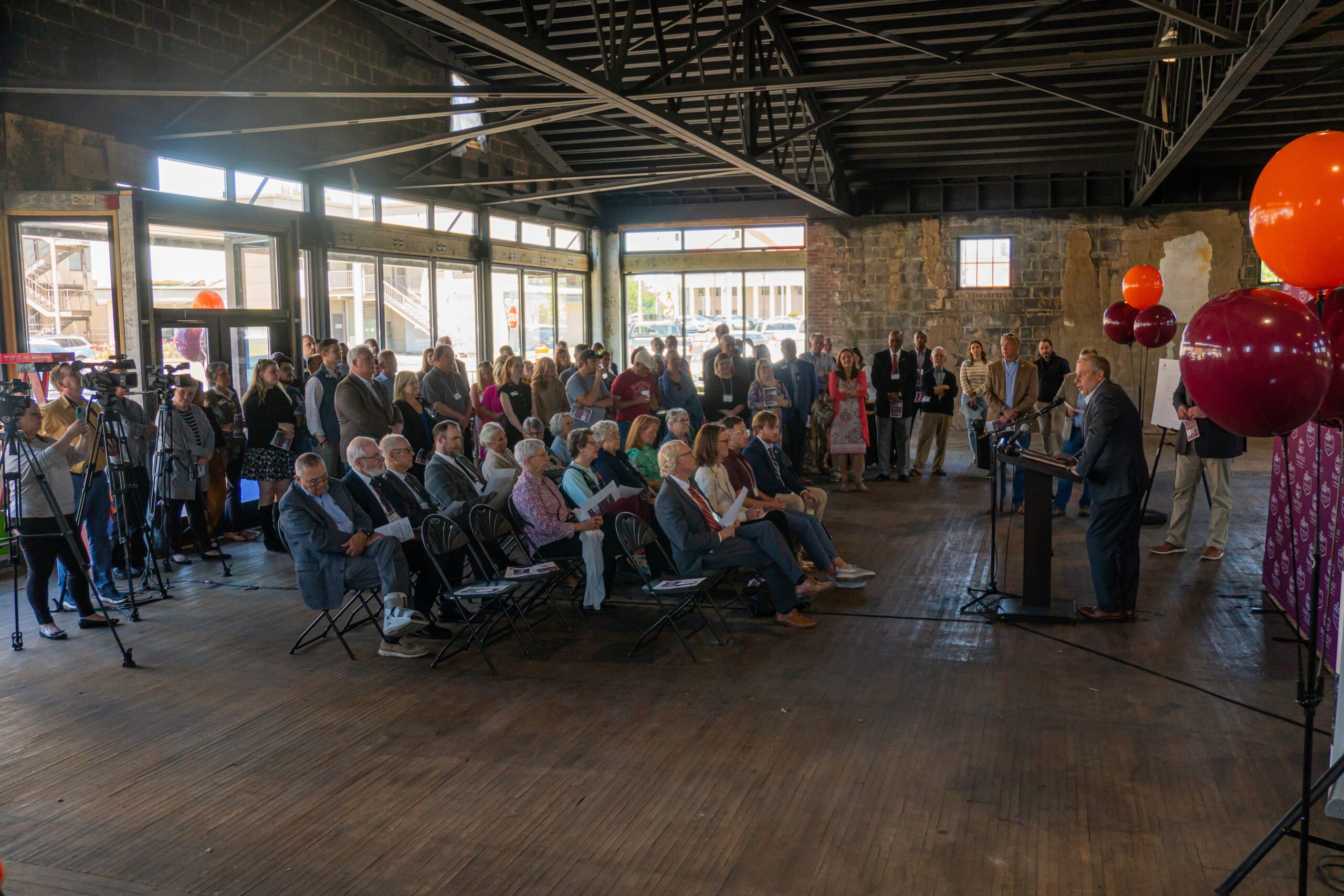
Blount Co. Receives $1.6 million to Improve Broadband

Tennessee Gov. Bill Lee and Department of Economic and Community Development (TNECD) Commissioner Stuart C. McWhorter announced the state will award $162.7 million in broadband and digital opportunity grants.

In total, these investments will provide broadband access and digital opportunity programs to more than 236,000 Tennesseans across 92 counties.

“Broadband is essential to all Tennesseans, and that’s why we are making strategic investments in our state’s broadband infrastructure and digital opportunity programs to create a pathway to education, job training and greater opportunity statewide,” said Gov. Lee. “I thank the Financial Stimulus Accountability Group for their continued support and management of these broadband dollars.”

With today’s announcement, TNECD has invested more than $715 million to expand the state’s broadband infrastructure, connecting more than 689,000 Tennesseans across 275,000 residential and business locations.

“More than $715 million has been invested to expand broadband under Governor Lee’s administration, and we are excited to announce additional funding today that will ensure
Tennesseans have access to and benefit from high-speed internet, which opens the door to high-quality job training,” said Commissioner McWhorter.

Today, a total of $97.2 million is being funded by the Last Mile and Middle Mile infrastructure programs, and $65.5 million will be invested in digital opportunity programs. These initiatives are part of a broader strategy to ensure that all residents have access to high-speed internet by 2028, and have opportunities to develop digital skills, access high-quality tech jobs, connect to broadband enabled devices and access online learning and telehealth resources.

TNECD’s investment of $97.2 million in broadband infrastructure will provide access to more than 58,200 Tennesseans across 23,000 locations in 37 counties.

To promote broadband opportunity and high-paying digital jobs, TNECD launched four new programs during this funding opportunity: Digital Skills, Employment and Workforce
Development (DSEW), Connected Community Facilities (CCF), Broadband Ready Communities (BRC) and Tennessee College of Applied Technology (TCAT) Broadband Workforce grants.

The DSEW grants, totaling $27.9 million, will be distributed among 47 organizations that will offer a variety of training and education programs to advance digital skills and workforce development, creating a pipeline for well-paying digital jobs.

The CCF grants, totaling $26.5 million, will be distributed among 19 local governments and will facilitate digital opportunity by construction and renovation of spaces that offer services for digital advancement in workforce, healthcare, and education.

The BRC grants, totaling $6 million, will be distributed among 64 local governments and support community-based digital skills training, public Wi-Fi projects, distribution of free or low-cost devices and marketing for low-cost internet plans.

The TCAT Broadband Workforce grants, totaling $4.9 million, will be distributed among five TCATs that will offer a Telecommunications Electronics Technician diploma. The objective of the program will be to produce a well-trained and diverse telecommunications workforce capable of deploying and managing broadband infrastructure.

Grantees across all programs are investing approximately $48 million in matching funds and will complete their projects by December 31, 2026.

Below is a list of the recipients for the latest round of funding:

  1. Spectrum Southeast
    $291,729.98 – Serving parts of Blount County
  2. Blount County
    $100,000.00
  3. Maryville College
    $776,814.00 – Serving parts of Blount County
  4. University of Tennessee
    $512,916.00 – Serving parts of Knox, Anderson, Blount, Bradley, Campbell, Cocke,
    Cumberland, Grainger, Hamblen, Jefferson, Knox, Loudon, McMinn, Meigs, Monroe,
    Morgan, Rhea, Roane, Scott, Sevier and Union Counties

University of Tennessee launches College of Emerging and Collaborative Studies

The University of Tennessee, Knoxville (UTK) creates a talent pipeline for local companies, and for years it has been sustainable. However, things started to shift once artificial intelligence (AI) and machine learning hit the workplace. Now, everything is changing, and the skills of emerging young professionals need to change, too.

According to the Technology Skills Gap survey by the Knoxville Chamber and the Knoxville Technology Council, local businesses want to hire people with AI skills and would be willing to pay them more. Young professionals cite a lack of good-paying jobs in the city, and according to the 2023 Career Outcomes Report generated by UTK, the median salary for a graduating student is $56,384.

Enter UTK’s new College of Emerging and Collaborative Studies (CECS), created to train students to be innovative, technology-forward thinkers in any field or industry they enter. The new college will produce competitive applicants with relevant, timely skills that businesses are looking for and provide students with the higher salary positions they seek.

Read entire article from Teknovation.biz

Pellissippi State commits to recruiting more students to advanced manufacturing 

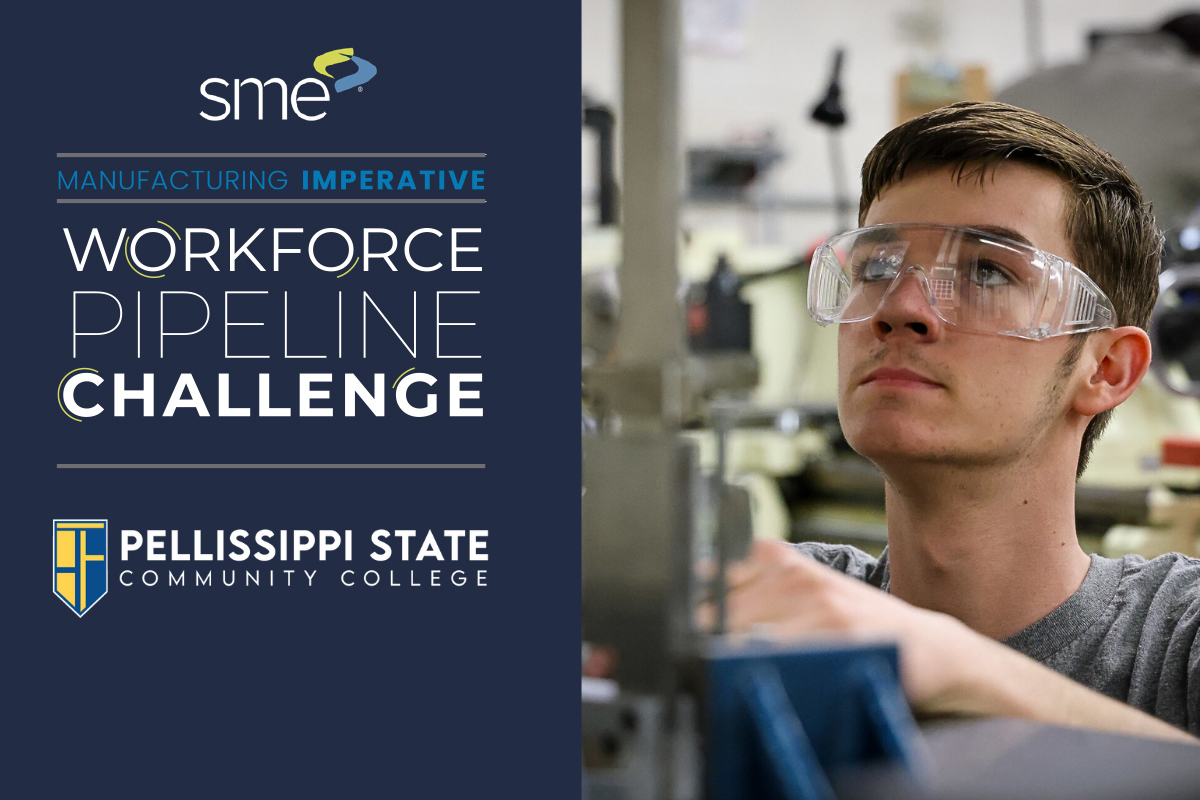
Pellissippi State Community College kicked off a three-year challenge Wednesday to attract and recruit 1,000 students into advanced manufacturing and connect them with industry partners. 

More than 30 representatives from local manufacturing companies, K-12 school systems, chambers of commerce and the college were on hand to learn more about the SME (Society of Manufacturing Engineers) Manufacturing Imperative – Workforce Pipeline Challenge.  

Pellissippi State President L. Anthony Wise Jr. said the partnership aligns with the college’s roots as a technical institute. 

“We are committed to building the next generation of manufacturing professionals,” Wise said. “The sustainability of the industry depends on the development of the talent pipeline.” 

The alliance between Pellissippi State and SME is designed to build awareness of careers in manufacturing and accelerate the education and skill development needed to place Tennessee students in jobs making family-sustaining wages. 

The challenge comes as the manufacturing industry faces an estimated 2.7 million unfilled jobs by 2030. Together with SME, Pellissippi State will work to develop strategies that will strengthen the manufacturing workforce in East Tennessee. 

Pellissippi State is one of only 25 schools in the country invited to participate in the challenge with each college tasked with attracting 1,000 students into manufacturing jobs over the next three years. 

For more information on Pellissippi State’s partnership with SME and the Workforce Pipeline Challenge, or to learn more about opportunities to engage with and support the program, contact Patty Weaver, vice president of external affairs for Pellissippi State, at [email protected]

SkyNano Technologies Opens 20,000-square-foot facility i

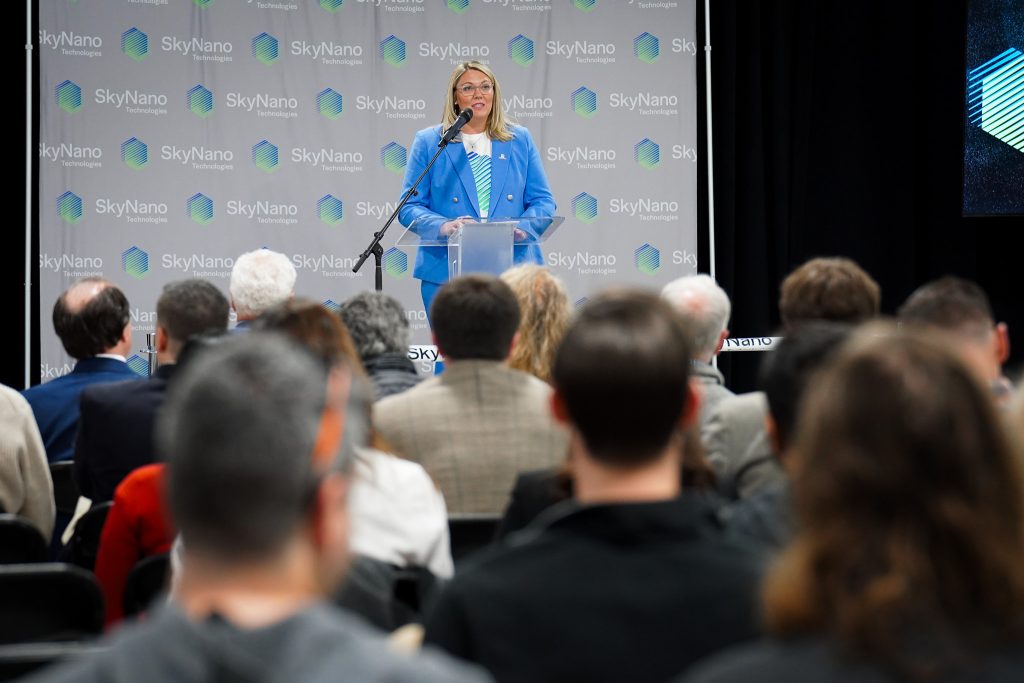
SkyNano is an East Tennessee deep tech start-up success story; one that the Co-Founder, Anna Douglas has been writing for seven years. On Tuesday morning, Douglas, alongside dozens of community members and partners, celebrated the ribbon cutting for SkyNano’s new 20,000-square-foot facility in Louisville, Tennessee.

SkyNano brings to market new, cutting-edge technology that helps with global decarbonization efforts. For the last several years, Douglas has been developing and expanding novel electrochemical manufacturing technology for the capture and conversion of CO2 into carbon-based materials, primarily carbon nanotubes.

Her revolutionary concept captured the attention of the Oak Ridge National Laboratory in 2017, around the time Tom Rogers spearheaded the launch of the Innovation Crossroads program. Through the support of the U.S. Department of Energy, Douglas joined the first cohort of the post-doctoral entrepreneurship program. It was ultimately the influence of that program, community connections, and a robust support system that convinced her to plant her research, and new facility in East Tennessee.

Read complete story at Teknovation.biz

TNECD Celebrates Tennessee’s Skilled Workforce with Release of “Born to Make”

The Tennessee Department of Economic and Community Development (TNECD) released its newest anthem video, “Born to Make,” in conjunction with February serving as National Career and Technical Education (CTE) Month in Tennessee.

CTE gives students and adults the academic skills, knowledge and training necessary to succeed in future careers while also building upon skills to prepare them for a wide range of jobs in high demand. While CTE is taught to school-aged students in middle and high school, it is also offered to adult students at postsecondary institutions in an effort to give more Tennesseans the skills they need to obtain careers across a variety of industries.

Gov. Bill Lee issued a proclamation asking Tennesseans to join him in celebrating February 2024 as Career and Technical Education Month and highlighting how CTE gives Tennessee students opportunities to advance their education and training in order to better position them for future success while also strengthening Tennessee’s workforce pipeline.

“The pathway to success doesn’t look the same for every Tennessean and while attending a four-year institution may be the right option for some, a certification from one of our Tennessee Colleges of Applied Technology may be right for others,” said Gov. Lee, “We have prioritized career readiness so that more Tennesseans are given the opportunity to follow the career path of their choosing.”

“Born to Make” focuses on the Tennesseans that create products known around the world from here in the Volunteer State. From cars and boats to whiskey and chocolate to chart-topping songs and motion pictures, “Born to Make” celebrates Tennessee’s workforce across a number of industries.

“The strength of Tennessee’s brand wouldn’t be what it is if it weren’t for the men and women who contribute to exceptional products that are made in our state,” said TNECD Commissioner Stuart C. McWhorter. “In ‘Born to Make,’ we recognize and applaud the skilled individuals that dedicate their talents to the success of Tennessee’s businesses and the reputation we are known for around the globe.”

Watch “Born to Make” here and follow TNECD on social media to see highlights of the businesses and workforce that shape Tennessee.

Pellissippi State now can certify Haas machine operators

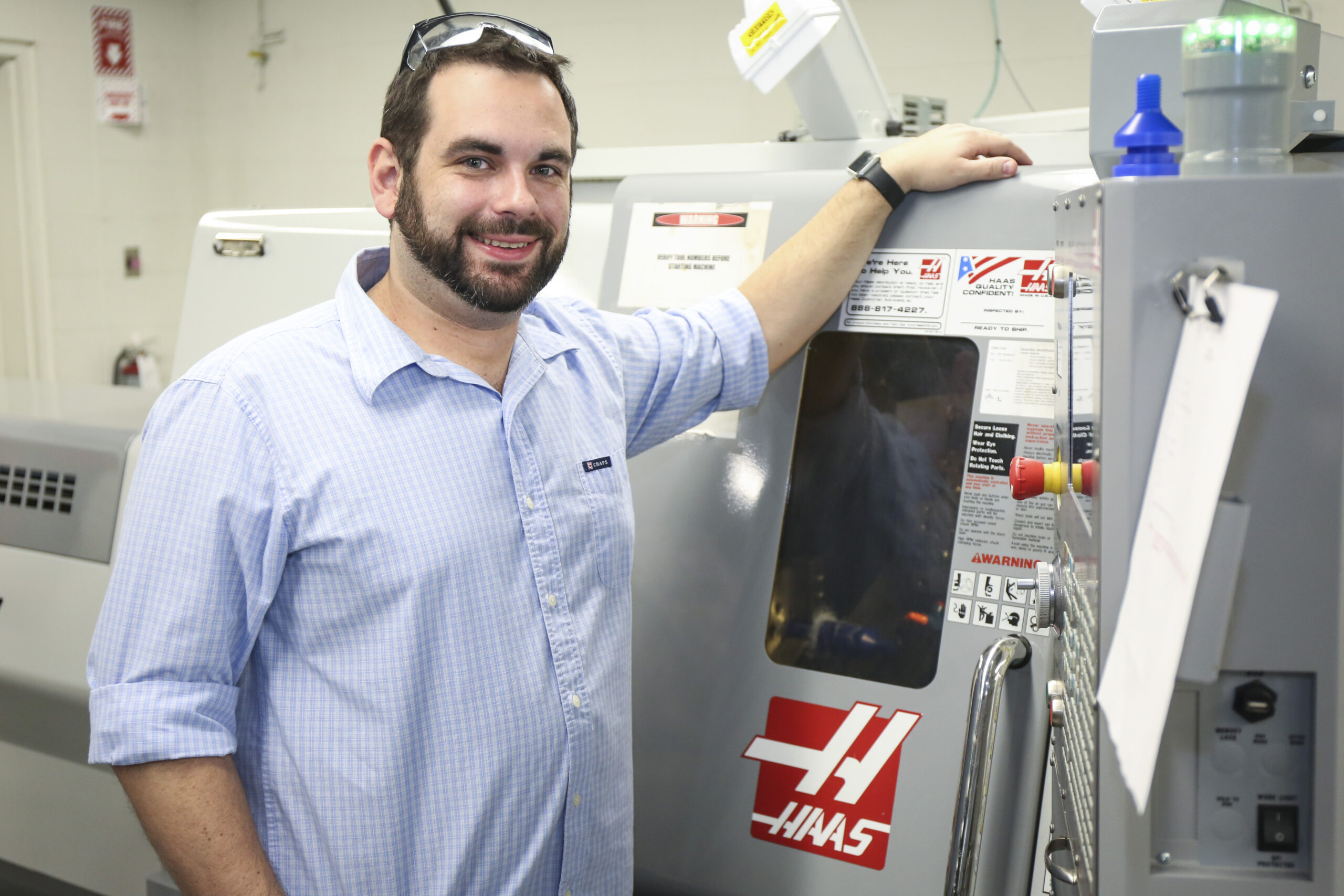
Pellissippi State Community College is now one of only two higher education institutions nationwide that can provide in-person assessments for those seeking Haas certification as a Basic Mill Operator, according to a Haas representative.

Haas Automation is the largest machine tool builder in the United States and one of the largest builders of CNC machines in the world. CNC stands for computer numerical control, and these machines play an important role in the manufacturing industry.

“The regional need for CNC machine operators has grown significantly,” said Andy Polnicki, director of Pellissippi State’s MegaLab. “This training and certification provide an opportunity for people in our region to be prepared to enter this field or get the promotion they are seeking.”

Four high school students from Knox and Blount counties became the first to become Haas certified at Pellissippi State on June 8.

The Haas Certification Program was developed after many discussions with Haas customers regarding their struggles with finding machine operators, according to Haas. Haas Automation listened to the customers’ issues and decided to help address the labor shortage issue by creating an online curriculum, after which students must pass an in-person, hands-on test.

“Haas is aware that watching a dozen or so videos will not make a student a machinist,” according to Haas materials. “However, we do believe that the videos and the course curriculum that we have created will give students the necessary skills and understanding to successfully become a Basic CNC Operator. Students will also gain exposure to some of the basics of machining that might otherwise take many months on the job.”

Previously, those who completed the Haas Certification online curriculum had to take their in-person, hands-on test at a Haas factory outlet. Pellissippi State offering these assessments helps alleviate scheduling conflicts at the Knoxville Haas location.

“After completion of the online curriculum, the students can schedule a time to come to Pellissippi State’s Hardin Valley or Strawberry Plains campus and participate in a hands-on practical test,” Polnicki explained. “A passing grade on the hands-on practical test will yield a Haas Certificate Diploma.”

While Pellissippi State is starting by offering the assessment for Haas Basic Mill Operator, the college’s intention is to eventually offer a series of Haas certification programs, Polnicki added.

“Employers are seeking specific skill sets, and specialized certifications such as these can often provide job applicants with an edge over other applicants,” said Susan Webb-Curtis, Pellissippi State’s new executive director for Workforce and Community Development. “The Haas certification verifies that these candidates have completed training and have been able to demonstrate the entry-level skills needed to safely and efficiently operate basic milling machinery. Being able to offer hands-on assessments for the Haas Basic Mill Operator certification is a valuable service that Pellissippi State can now offer through our Haas certified instructors.”

Those interested in learning more about this opportunity should contact Andy Polnicki at [email protected].

Gov. Lee Issues Executive Order to Advance Nuclear Energy Innovation & Investment

Tennessee Governor Bill Lee signed an executive order to advance Tennessee’s position as a national leader in nuclear energy. Executive Order 101 creates the Tennessee Nuclear Energy Advisory Council, which will seek to build upon the state’s legacy in nuclear innovation and drive continued investment to create a nuclear energy ecosystem for the future of Tennessee. 

“Tennessee is ready-made to lead America’s energy independence and drive continued economic growth with safe, clean and reliable nuclear energy for the future,” said Gov. Lee. “Today, I’m signing an executive order that will continue our work to make Tennessee the number one state for nuclear energy companies to invest and thrive, bringing greater opportunity and quality jobs for Tennesseans.”

Yesterday, prior to signing Executive Order 101 in Knoxville, Gov. Lee joined industry leaders at the annual Nuclear Energy Assembly in Washington, D.C. to highlight Tennessee’s leading role in the future of American energy.

The Tennessee Nuclear Energy Advisory Council will consist of 15 members, including members of the Lee administration, the Tennessee General Assembly, Tennessee’s Congressional Delegation and key nuclear industry stakeholders. 

The advisory council will recommend the following actions to advance Tennessee’s ability to lead the nation in nuclear energy:

·         Legislative, policy and budgetary changes to address regulatory, workforce or education barriers that exist to the creation and expansion of nuclear energy facilities in Tennessee

·         Funding opportunities for state government, local governments and the private sector

·         Storage and waste practices that continue the state’s long history of conserving Tennessee’s natural resources

·         Federal actions that Tennessee should pursue with federal partners and agencies

This year, Gov. Lee partnered with the Tennessee General Assembly to create a $50 million Nuclear Fund in the state’s Fiscal Year 2023-2024 budget. The fund, proposed by Gov. Lee at his 2023 State of the State address in February, will establish a nuclear development and manufacturing ecosystem built for the future of Tennessee by providing grants and assistance to support nuclear power-related businesses that choose to relocate or grow in the state. 

Maryville College announces new Downtown Center hub for hospitality

Beginning in 2024, Maryville College will return to the downtown area that shares its name for the first time in more than 150 years.

Established as the Southern and Western Theological Seminary in 1819, the College was a part of downtown Maryville until the completion of Anderson Hall, the oldest building on its present campus, in 1870. In early 2024, however, the Maryville College Downtown Center will open at 205 Court St., serving as both a learning lab and an embassy, of sorts, to the community in which the institution has long been invested.

“To many of you, this news is probably not a surprise, given our goal of being ‘of and for the region,’” MC President Dr. Bryan Coker wrote to faculty, staff and students recently. “As I have often stated, the fates of the College and downtown are inextricably linked; thus, I believe it’s important for us to have a substantive stake in the revitalization of downtown Maryville. I wholeheartedly believe that a stronger downtown means a stronger Maryville College, and vice versa.

“MC alumni often reminisce about downtown Homecoming parades as well as frequenting downtown businesses. However, the proliferation of strip malls and other venues ultimately drove retail and foot traffic away from Maryville’s downtown core. As the years progressed, increased traffic on Lamar Alexander Parkway created a division between the MC campus and downtown, despite the convenience of a pedestrian bridge.

“Fortunately, the tide seems to now be turning for downtown Maryville, thanks to forward-thinking investors who want to see the area thrive once again,” Coker added.

A downtown Maryville landmark, the building — opened in 1941 as J&K Grocery, the storefront of which faces East Church Avenue and extends over the space currently occupied by Tri-Hop Brewery — has undergone extensive renovations, Coker added, giving College leaders, who plan to lease the main/street level floor of the building, a blank slate. As a result, it will serve as a hub for the College’s newly created Hospitality and Regional Identity program of study, coordinated by incoming professor Dr. Angela Sebby and funded through major gifts earmarked specifically for that program.

Once completed, the MC Downtown Center, Coker said, will feature:

  • Two classrooms primarily for Hospitality and Regional Identity courses, but open for any other classes as available;
  • Offices for the program’s faculty;
  • A teaching/demonstration kitchen for the Restaurant at RT Lodge (one of the program’s vocational and financial partners) and other local dining partners, to offer cooking classes for the external community;
  • Brewing equipment and teaching space for the newly created Fermentation Sciences minor at MC, as well as a place to offer beer-brewing classes for the external community; and
  • A small Maryville College gift shop, where MC gear can be purchased.

“This Downtown Center will be the place where the College meets the community, and where the presence of students, faculty and staff contributes to the resurgence and vitality of downtown,” Coker said. “In turn, we believe students and employees will deeply benefit from the experience of learning and working in historic Downtown Maryville, gaining a greater appreciation for the power of ‘place’ in one’s experiences, which is a significant focus of the Hospitality and Regional Identity program.”

The center, Coker said, is another sign of the dual commitment to joint improvements between the College and the City of Maryville. Recently, city officials announced plans to improve the College Street Corridor, running from the pedestrian bridge linking campus over East Lamar Alexander Parkway to the center of downtown, including such improvements as an archway over the bridge entrance, refurbished sidewalks and lighting on College Street and a tartan-themed crosswalk that keeps with the Scots pride that’s an integral part of the MC image. In addition, Christy McDonald Slavick, executive director of strategic initiatives at MC, serves as the chairperson of the Downtown Maryville Association, further strengthening the bonds between the two entities.

“Private colleges must increasingly act in the public interest, and in the case of the MC Downtown Center, we are bringing our programs to the community, as well as playing an important role in historic preservation and revitalization,” Coker said. “In addition, ‘Place’ has a powerful role in educational experiences, and we look forward to our students learning and interacting in a historic downtown setting where an exciting revitalization is occurring. As we endeavor to be a college ‘of and for the region,’ the Downtown Center is a tangible manifestation of this important goal.”

Such an off-campus venture isn’t a first for MC, Coker pointed out: From 1969 to 1980, the College operated the Tremont Environmental Education Center — now known as the Great Smoky Mountains Institute at Tremont — under the supervision of the late Dr. Randolph Shields, a biology professor at the College for decades. In addition, Shields supervised the now-defunct Mid-Appalachian Field Biology Teaching and Research Center from 1967 to 1977, a joint research facility for the Mid-Appalachia College Council.

“The Downtown Center is just another example of the College connecting with the community, in the interest of student learning, as well as serving as a resource for the region,” Coker said. “It’s undoubtedly an audacious and exciting step for the College, and I am grateful for those who are supporting us in this endeavor.” 

Nisus Corporation Earns Certification

Nisus Corporation is proud to announce that they have earned their Responsible Care® certification through the American Chemistry Council (ACC). Certification as a Responsible Care member requires participating chemical companies to fully implement 12 important guiding principles based on environment, health, safety & security (EHS&S) and ethical business practices, openly report on metrics related to EHS&S and undergo a rigorous third-party audit to ensure they are meeting EHS&S standards that far exceed industry and federal requirements for chemical manufacturing. Responsible Care certification also qualifies Nisus as a full member of the ACC.

“As a Responsible Care member, we commit to upholding the American Chemistry Council’s Responsible Care principles of striving to continually improve environment, health, safety, and security performance for our chemical operations. We are required to collect and annually report performance data in many areas of our operation,” said Lee Barrett, President of Nisus Corporation. Barrett continued, “The effort of our entire company, including the Executive team, operations, sales, marketing, product stewardship, and research and development, made this achievement possible. Special thanks go to Karson Guardado, Director of Quality and Design, who championed the Responsible Care project and was critical to our success.”

“I am honored to be part of such an amazing company that looks beyond the financial or the individual to instead focus on the team, the community, and the environment,” said Guardado, who also serves as Nisus’ Responsible Care Coordinator. “Nisus is always looking at ways to make our company and our community a better place, and Responsible Care is but a stepping stone on that journey. We could not have achieved this without our amazing people here at Nisus. I am so proud of who we’ve become.”

Attaining Responsible Care certification entails cooperation and coordination across an entire organization that shares an ongoing commitment to improving in areas of EHS&S. Maintaining certification requires constant continual improvement in critical areas, such as employee, product and process safety; chemical supply chain security; product stewardship; environment; energy; accountability through management system certification; and community outreach.

“Nisus, as a word, means a great effort towards attaining a specific goal,” said Barrett. “We see being a Responsible Care member as an embodiment of that ethos to always raise the bar higher for ourselves. We welcome the opportunity to meet that challenge so that we can continue to offer the best resources possible to our customers, our employees and our community.”

Nisus Corporation is a privately held company that manufactures sustainable products for the pest control, wood preservation and agricultural micronutrient industries at its facility in the foothills of the Great Smoky Mountains. Nisus is a recognized Responsible Care member of the American Chemistry Council.

Over $100 Million Approved for TN Small Businesses

NASHVILLE, Tenn. – The U.S. Department of Treasury announced today the approval of up to $116.9 million in funding under the State Small Business Credit Initiative (SSBCI) to support small business growth in Tennessee.

“Small businesses are the backbone of our economy, and they play a central role in building strong communities throughout Tennessee,” said Tennessee Gov. Bill Lee. “I’m pleased that this funding will help expand the growth of small businesses and encourage interested Tennesseans to utilize these funds to promote economic growth in our state.”

The Tennessee Department of Economic and Community Development (TNECD) will operate an initiative called Fund Tennessee, which is made up of a suite of programs from venture capital, to loan programs and technical assistance. TNECD allocated $46.9 million for the debt program that will work with participating Community Development Financial Institutions (CDFIs) and Minority Depository Institutions (MDIs) to serve rural to urban areas of the state, including underserved communities.

“With one of the top business climates in the country, Tennessee is the ideal location to create, launch and grow a business,” said TNECD Commissioner Stuart McWhorter. “We appreciate the U.S. Department of Treasury for approving this funding, which will support and expand Tennessee’s small business and entrepreneurial ecosystem.”

TNECD, in partnership with LaunchTN, allocated $70 million for the program, which is focused on direct investments in early-stage startups, along with a fund-of-funds strategy investing in emerging venture capital fund managers. 

“Access to investment capital has been a challenge in Tennessee, so these funds will fill an immediate demand and support growth in startups that are primed to reach their potential,” said LaunchTN CEO Lindsey Cox. “We are eager to help founders across the state access this capital so they can continue innovating.”

TNECD and LaunchTN are hosting regional kickoff meetings to give an overview of the new Fund Tennessee initiative. The meetings will begin today and continue through April. To learn more or register for a kickoff meeting, visit here.

The SSBCI program provides funding to empower small businesses to access capital needed to invest in job-creating opportunities.

In addition to generating private investment in states across the country, SSBCI provides historic investments in U.S. territories, with significant impacts for growing access to credit in these markets. Through SSBCI, U.S. Treasury has allocated more than $300 million to support small businesses and entrepreneurs.